XRP for betting: speed, destination tags and what to watch
XRP basics
XRP is the native asset of the XRP Ledger, a public blockchain that went live in 2012 and was designed from the outset for payments rather than for general-purpose computation. Where many networks ask you to think in terms of smart contracts and tokens, the XRP Ledger does a small number of things and tries to do them quickly: it moves value between accounts and settles in a few seconds. The ledger keeps a record of accounts, each identified by an address that begins with the letter r, and each account holds a balance of XRP measured in drops, where one XRP equals one million drops. That is the whole mental model you need before sending anything.
The asset itself is not a stablecoin. One XRP is worth whatever the market says it is worth at any given moment, and that price moves continuously. This matters more for betting than for many other uses, because a bet is usually denominated in euros or in a stable unit while your deposit arrives as XRP. Between the moment you send and the moment the sportsbook credits your account, the euro value of what you sent can shift. We will come back to that, because it is the single most practical risk in using XRP for this purpose and it is easy to underestimate.
Accounts on the XRP Ledger are not free to create and are not anonymous in the way some people assume. Every account must hold a small minimum balance, and every transaction is public on the ledger, visible to anyone who knows the address. The ledger does not record your name, but an address that has been linked to you once — through an exchange withdrawal, for example — can be linked again. Treat addresses as pseudonymous, not private. If privacy is your reason for choosing a particular book, the choice of platform matters at least as much as the choice of coin.
For betting specifically, XRP sits in an interesting spot. It is fast and cheap enough to function as a working deposit rail, it is listed on essentially every exchange, and it has deep liquidity, so converting to and from it is rarely a problem. It is also volatile, which cuts both ways. Some people treat that volatility as a feature and hold XRP between bets; others want nothing to do with it and convert immediately. Neither approach is wrong, but you should know which one you are doing before you press send.
One more piece of groundwork. XRP is not the same as the XRP Ledger's issued tokens, and it is not a wrapped asset. When you withdraw XRP from an exchange, you are typically receiving real XRP on the native ledger, though some platforms batch withdrawals internally and only settle on-chain later. That distinction matters when a transfer seems slow: the exchange may have accepted your request without yet broadcasting a transaction. Always check for a transaction hash before you conclude something has gone wrong.
Fast low-fee transfers
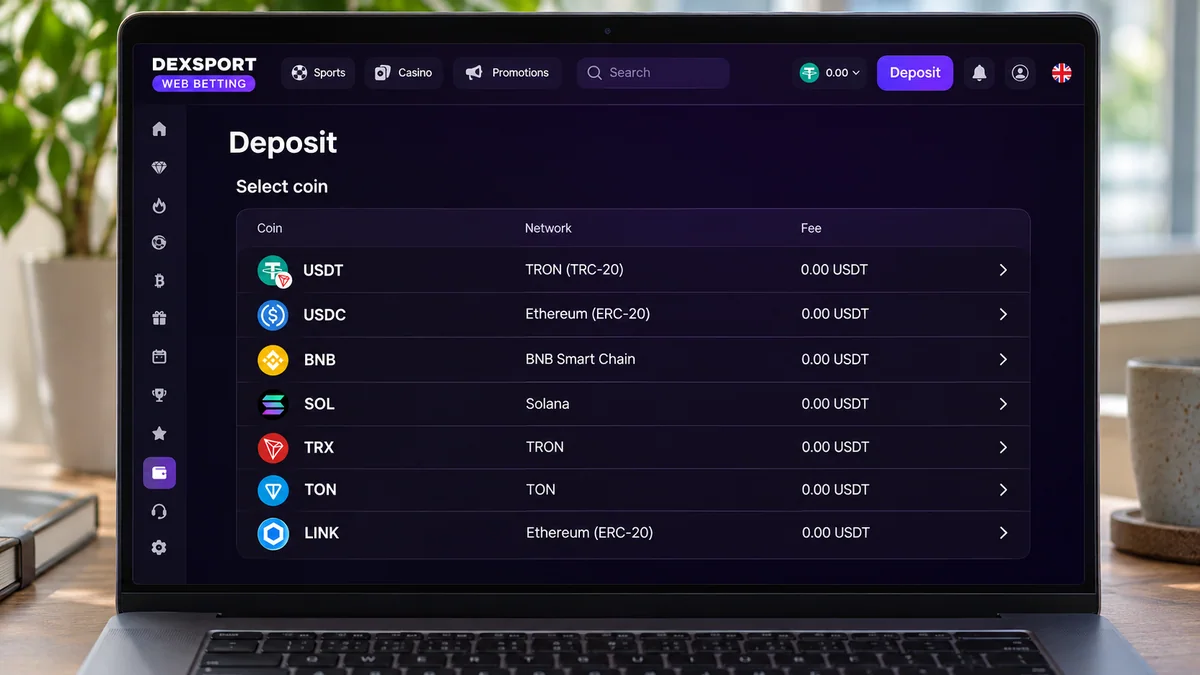
The XRP Ledger settles a transaction in roughly a few seconds under normal conditions, and the fee per transaction is a tiny fraction of an XRP, typically far below a cent in euro terms. This is the core reason the asset gets recommended for moving value between a bank, an exchange and a sportsbook. Compare it with a bank transfer that may take a working day, or with networks where a busy period can push fees to levels that make a small deposit uneconomic. For a deposit of a few hundred euros, paying a fee measured in fractions of a cent is close to ideal.
The mechanism is worth understanding because it explains both the speed and the occasional surprise. The XRP Ledger uses a consensus protocol in which a set of independent validators agree on the order and contents of transactions every few seconds. There is no mining in the proof-of-work sense and no long chain of confirmations to wait for. Once a transaction is included in a validated ledger, it is final for practical purposes. Most exchanges and sportsbooks therefore credit XRP after one or two validated ledgers, which is why the whole journey from send to credited balance often takes well under a minute.
Fees work differently from what many people expect. The fee you pay is not a market price that rises with demand in a simple way; it is a minimum cost per transaction that increases only when the network is under heavy load, as a spam deterrent. In ordinary conditions you will pay the minimum, and the minimum is negligible. If you are ever quoted a large fee by a wallet, that is usually the wallet's own service charge or a badly set fee parameter, not the network cost. Check before you confirm.
There are edge cases. Exchanges often batch customer withdrawals, so the on-chain transaction may happen minutes or hours after you click withdraw, even though the ledger itself is fast. Some platforms require a minimum withdrawal amount, and some impose their own fixed fee that dwarfs the network fee. The speed advantage is real, but it applies to the ledger, not necessarily to the intermediary holding your funds. If timing matters — a kick-off, a closing line — leave margin for the exchange's processing, not just the blockchain.
The low fee also changes behaviour in a subtle way. Because sending XRP costs almost nothing, people sometimes send small test amounts first, then the real amount. That is sensible. But it also means a mistaken send is cheap to make and just as irreversible as an expensive one. Cheap fees remove the financial deterrent that slows people down on other networks. The discipline has to come from you: verify the address, verify the tag, then send.
Finally, speed is not the same as certainty of crediting. A sportsbook's systems still have to detect the incoming transaction, match it to your account and update your balance. That internal processing can lag the blockchain. If a deposit has confirmed on-chain but not appeared after a reasonable interval, the transaction hash is your evidence. Keep it. It is the one thing support will ask for and the one thing that resolves the question quickly.
Destination tags
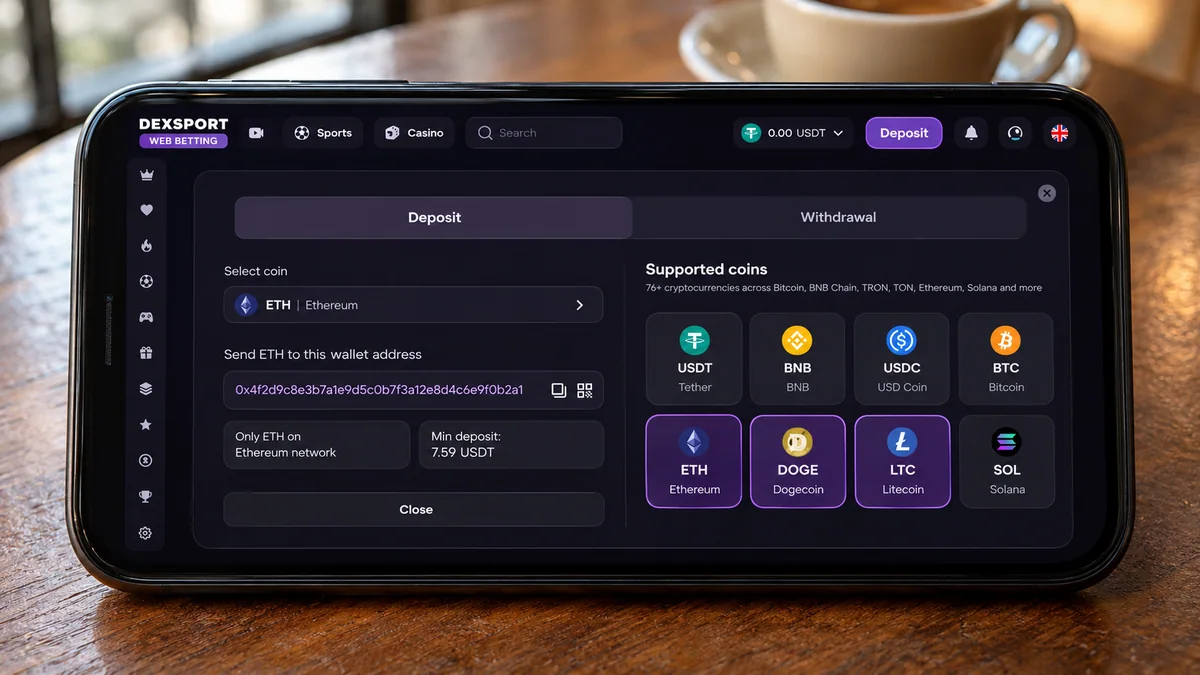
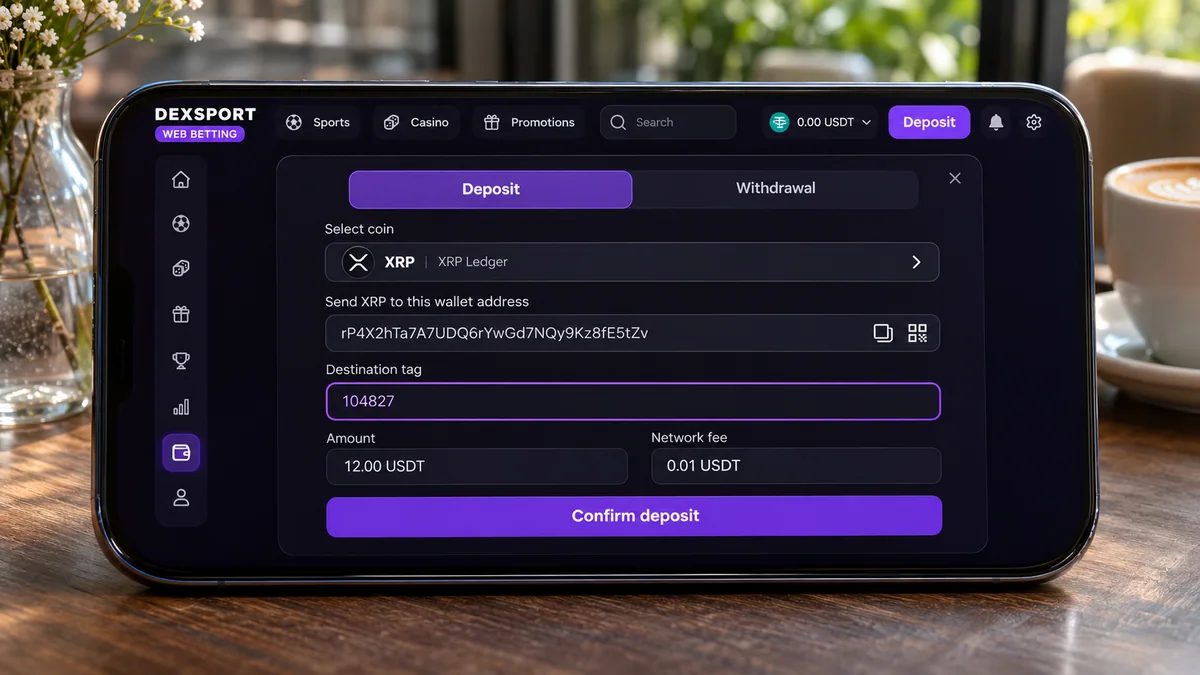
A destination tag is a number attached to an XRP payment that tells the receiving platform which customer the payment is for. It exists because many large services — exchanges, and some sportsbooks — use a single XRP address for all their customers. The address gets the money; the tag says whose money it is. If you send to a shared address without the correct tag, the funds arrive at the platform but are not attributed to you, and recovering them becomes a support process rather than an automatic credit.
This is the most common and most avoidable mistake in XRP transfers. The failure mode is asymmetric: the transaction succeeds on-chain, the money leaves your control, and yet your betting balance does not move. From the ledger's point of view nothing went wrong. From yours, everything did. Platforms can usually reconcile a missing tag manually if you provide the transaction hash and explain, but it can take days, and some are stricter than others. The safe assumption is that a missing or wrong tag means a difficult recovery.
The tag is not part of the address and not a password. It is a routing instruction, and it must match exactly what the receiving platform shows you at the moment you initiate the deposit. Tags can change. A platform may rotate them, assign a fresh one per deposit, or require a memo field in a particular format. Never reuse a tag from an old screenshot, an old email or a previous deposit without checking the current instructions in your account. The thirty seconds it takes to re-read the deposit page is the cheapest insurance in this entire process.
There is a related edge case worth knowing. Some destinations genuinely do not require a tag — a personal wallet you control, for instance, where the address is yours alone. If a platform's deposit page shows no tag and no memo, that usually means the address is dedicated to you, but confirm it rather than assume. Conversely, if a page shows a tag, it is mandatory even if the field looks optional in your wallet. Wallets vary in how prominently they display the tag field; some hide it behind an advanced option. Find it before you send, not after.
Withdrawals have the mirror-image problem. When you withdraw XRP from a sportsbook to an exchange, the exchange will often require a tag on its deposit address, and that tag belongs to your account at the exchange. If you omit it, your withdrawal lands in the exchange's shared wallet unattributed. The same recovery grind applies, now in the other direction. The habit to build is simple: every time you move XRP to a shared address, treat the tag as part of the address. Address plus tag, together, or not at all.
One honest note about the wallet-first, no-KYC model that Dexsport follows. Because there is no account registration in the conventional sense, the thing that ties a deposit to you is the address or tag the platform gives you, so getting it right is even more central than usual. That is not a reason to avoid such platforms; it is a reason to slow down for the ten seconds it takes to copy both fields correctly. The absence of an account also means the absence of an account recovery safety net. Precision replaces it.
Reserve requirement on accounts
Every XRP Ledger account must hold a minimum amount of XRP, called the reserve. You cannot create an account with a zero balance, and you cannot spend your way down to zero. The reserve exists to keep the ledger's account set from being spammed with empty accounts, and it applies to everyone equally. The base reserve is a small number of XRP per account, with an additional owner reserve for certain objects an account holds, such as trust lines or open offers. The exact figures are set by the network and can change through validator voting, so check current values rather than relying on a number you remember.
For most bettors this is a background detail, because you are sending from an exchange or a wallet that already holds more than the reserve. It becomes relevant in two situations. The first is when you set up your own wallet to hold XRP. You will need to fund it with at least the reserve before it can receive anything, and that reserve is effectively locked — it stays in the account as long as the account exists. If you are moving small amounts, the reserve can be a meaningful proportion of your balance, and you should know that before you plan a series of small transfers.
The second situation is emptying a wallet. If you try to send your entire balance, the transaction will fail because it would leave the account below the reserve. You have to leave the reserve behind, or close the account properly, which returns the reserve to you. Many wallets handle this with a "close account" or "remove account" function that sends the remaining balance and deletes the account in one step. If you simply send everything you think you have, you will get an error and may spend a while working out why. The error is the reserve doing its job.
There is a practical consequence for betting flows. Suppose you keep a personal wallet as an intermediate step between exchange and sportsbook. That wallet needs its reserve funded, and that XRP is parked. For a regular bettor moving modest amounts, the parked amount is small in absolute terms but worth understanding so it does not appear as a mysterious shortfall. If you instead send directly from an exchange to the sportsbook, the reserve question mostly disappears, because the exchange holds the account and manages its reserves at scale. Fewer hops means fewer places for a small deduction to appear.
The reserve is also a reminder that XRP is not a token you can hold in arbitrarily small fragments without cost. The ledger's smallest unit is the drop, but the account-level minimum is a real constraint. If you are the kind of person who likes to keep a small float on a personal wallet for quick deposits, fund it above the reserve with room to spare, and check the current reserve figure when you do. It is a small piece of housekeeping that prevents a confusing failed transaction at an inconvenient moment.
None of this should put you off self-custody. Holding your own keys is a legitimate choice and, for some people, the whole point. The reserve is simply the price of admission, and it is a fixed, transparent, refundable-on-close cost rather than a fee that disappears. Know it, fund for it, and it will never surprise you.
Volatility between deposit and bet
Here is the scenario that catches people. You decide to deposit the equivalent of, say, two hundred euros. You buy XRP on an exchange, send it, and by the time the sportsbook credits your balance and you place your bet, the euro value of that XRP has moved. If it moved down, you have less to bet than you planned. If it moved up, you have more — which sounds pleasant until you remember that the same movement applies to every XRP you are holding between bets, in both directions. XRP can move several percent in a day, and occasionally far more in an hour. Over a deposit that takes a minute, the move is usually small; over a deposit that waits for an exchange's batch processing, it can be larger.
The size of the risk depends on how long your money sits in XRP. A transfer that completes in under a minute exposes you to very little. A transfer where the exchange holds your withdrawal for an hour, or where you keep a balance in XRP on the sportsbook between sessions, exposes you to a lot more. The lesson is not that XRP is dangerous; it is that time in transit is time exposed. Minimise it. Send when you are ready to bet, convert or stake promptly on arrival, and do not treat a sportsbook XRP balance as a savings account.
There is a second, subtler layer. Some platforms denominate your balance in XRP and convert to euros only at the moment of the bet, while others convert on deposit and hold euros. The two behave very differently. In the first case, your betting power floats with the price until you place the bet. In the second, the price risk ends when the deposit is credited. Read the platform's documentation or test with a small amount to find out which model applies. It changes how you should think about timing, and it is not always obvious from the deposit page.
Hedging is possible but usually not worth it for a casual bettor. You could buy XRP, immediately short an equivalent amount elsewhere, and unwind once the deposit lands, but the fees and complexity outweigh the risk on a small transfer. A simpler approach is to buy XRP only when you are about to send it, rather than holding a stash in anticipation, and to accept that a small price move on a short transfer is part of the cost of using a fast rail. For larger amounts, or if you are moving money frequently, the volatility question deserves more thought, and a stablecoin rail may suit you better despite its own trade-offs.
The honest framing is that XRP's volatility is the price you pay for its speed and low fees. You are not forced to hold it; you are forced to hold it briefly. Treat it as a courier, not a vault. If you find yourself checking the XRP price to decide whether now is a good time to deposit, you have drifted from betting into speculation, and the two should be kept separate in your head and ideally in your accounts.
A careful first transfer
The first time you move XRP to a sportsbook, do it slowly and in two stages. Start by reading the platform's deposit page in full, including any note about tags or memos, and copy the address and tag directly from that page rather than from memory or a message. Then send a small test amount — enough to prove the route works, small enough that a mistake would be annoying rather than painful. Wait for it to be credited before sending the rest. This costs you one extra transaction and a few minutes, and it eliminates almost every way a first transfer goes wrong.
When you send the test, watch for the transaction hash and keep it. Check that the amount credited matches what you sent, allowing for any platform minimum or fee. If the test does not arrive, stop. Do not send the main amount hoping the first one was just slow. Use the hash to ask support what happened, and resolve it before committing more. A missing test deposit is a cheap lesson; a missing main deposit after a missing test is an expensive one, and entirely avoidable.
Once the route is proven, the main transfer is straightforward, but the same disciplines apply: fresh copy of the address and tag, a check that the tag field is filled if one was shown, and a confirmation of the amount before you press send. On the receiving side, remember the reserve if you are using your own wallet as an intermediate step, and remember that exchange withdrawals may lag the blockchain. Give yourself time before a kick-off rather than sending five minutes before you want to bet.
It is worth saying plainly that none of this is legal advice, and that the rules on online gambling and on crypto assets differ by jurisdiction and are subject to change. In the Netherlands, as elsewhere, there are licensing rules for operators and tax rules for winnings and for crypto gains, and they are not always intuitive. If you are unsure how any of it applies to you, take proper advice rather than relying on a guide. Our editors can explain how the mechanics work; we cannot tell you what is lawful or taxable in your specific circumstances.
Finally, the responsible-gambling note that belongs in any guide like this. Betting is for adults aged 18 and over, and it should be entertainment funded by money you can afford to lose, not a source of income. Crypto adds a layer of price risk and irreversibility on top of the ordinary risk of losing a bet, so set limits before you start, keep your betting funds separate from anything you need, and stop if it stops being fun. If gambling is causing you difficulty, seek support from a recognised helpline in your country. The speed and low cost of XRP make it a convenient rail for betting; they do not make betting safer, and they do not make a bad bet a good one.
This guide was researched, written and fact-checked by the Altcoin Bet Guide editorial desk before publication. Last reviewed 08.11.2026. Spotted something wrong? Tell us.