Solana for betting: fast confirmations, fewer fees, new risks
Solana in two paragraphs
Solana is a layer-one blockchain that processes transactions using a hybrid of proof-of-stake consensus and a technique called proof-of-history, which timestamps transactions before they are validated so that the network can order them without the usual back-and-forth between nodes. In practice this means the chain is built for throughput: blocks are produced in very short slots, and a well-formed transaction normally lands in seconds rather than minutes. For a bettor, the relevant consequence is simple. When you send SOL or a Solana-based token such as USDC on the Solana network to a sportsbook's deposit address, the funds usually appear in your account quickly enough that you can place a bet on the same match you were watching when you started the transfer.
The other half of the story is cost. Solana transactions carry a base fee measured in tiny fractions of a SOL, and even with a priority fee added to jump the queue during busy periods, the amount is trivial compared with moving value on a network where fees are priced in whole dollars. That combination of speed and low cost is why Solana has become a popular settlement rail for crypto betting sites, and why it is worth understanding properly before you use it. It is not a risk-free rail, though. The same design choices that make it fast also produce a particular set of failure modes — congestion, wallet address confusion, token-versus-coin mix-ups, and price movement during the minutes your money is in transit — and a careful reader should know about all of them before making a first deposit.
Fees and speed
Every Solana transaction pays a base fee, currently a very small fixed amount denominated in lamports (one lamport is one billionth of a SOL), plus an optional priority fee that you attach to signal how urgently you want the transaction included. The base fee is designed to be negligible; the priority fee is where competition happens. When the network is quiet, you can send with the minimum and expect confirmation within a slot or two. When it is busy — a popular token launch, an airdrop, a period of heavy on-chain trading — validators will preferentially include transactions that pay more, and a minimum-fee transaction may sit unconfirmed for a while or, in the worst case, expire and need resending. Your wallet will usually show you a suggested priority fee; you can accept it or raise it if you are in a hurry.
What does this mean in money terms for a deposit? If you are moving a few hundred euros' worth of SOL or USDC, the total fee will typically be a rounding error against the amount you are sending — think in cents, not euros, and often less than a cent. That is a genuine difference from networks where a deposit can lose a meaningful percentage of its value to fees, and it changes behaviour: on Solana it is economically sensible to test a deposit with a small amount first, because the test costs almost nothing. The same logic applies to withdrawals back to your wallet, though the sportsbook, not you, usually pays the network fee on the way out.
Speed is the more interesting variable, because "fast" is an average, not a guarantee. A normal confirmed transaction is one that has been included in a block and reached the network's confirmation threshold; most wallets and exchanges show funds after that point, which is usually a matter of seconds. But there are edge cases. If you set a priority fee that is too low during congestion, the transaction can be dropped rather than confirmed, and your wallet may show it as pending or failed after a timeout. If the network experiences a stall — rare, but it has happened — confirmation can be delayed well beyond the usual window. And if you are depositing from a centralised exchange rather than a self-custody wallet, the exchange adds its own internal processing time on top, which can be minutes or longer regardless of how fast the chain itself is.
There is also a subtlety about what "confirmed" means at the receiving end. A sportsbook credits your deposit once it sees the transaction at whatever confirmation depth its systems require. Some require only that the transaction is included and finalised; others wait for additional confirmations before releasing funds. In most cases this is invisible to you, but it explains the occasional experience of a transfer that looks complete in your wallet while the betting account still shows nothing. The right response is patience plus a check of the transaction signature on a block explorer, not a panicked second deposit.
Finally, remember that fees are paid in SOL even when you are sending a token. If your wallet holds USDC on Solana but no SOL, you cannot pay the network fee and the transfer will fail. This is one of the most common first-timer errors, and it is worth keeping a small SOL balance in any wallet you use for Solana deposits purely to cover fees.
Wallet and address basics
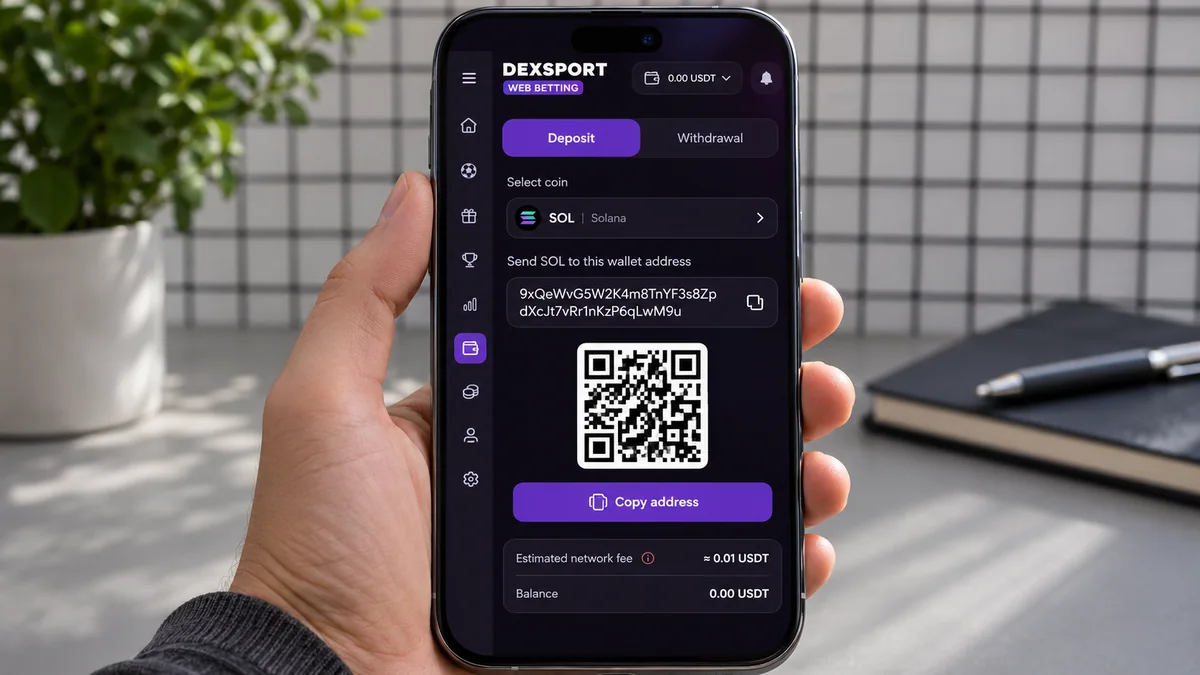
A Solana wallet is a keypair: a public address, which you share, and a private key or seed phrase, which you never share with anyone, including anyone claiming to be support for a betting site. The public address is a base58 string, typically around 44 characters, and it is case-sensitive. That last point matters more than it sounds. Copying an address by hand, or retyping it from a screenshot, is how people lose money; a single transposed character produces a valid-looking address that belongs to someone else, and blockchain transactions are irreversible. Always copy and paste, and check the first and last few characters against the source before you confirm.
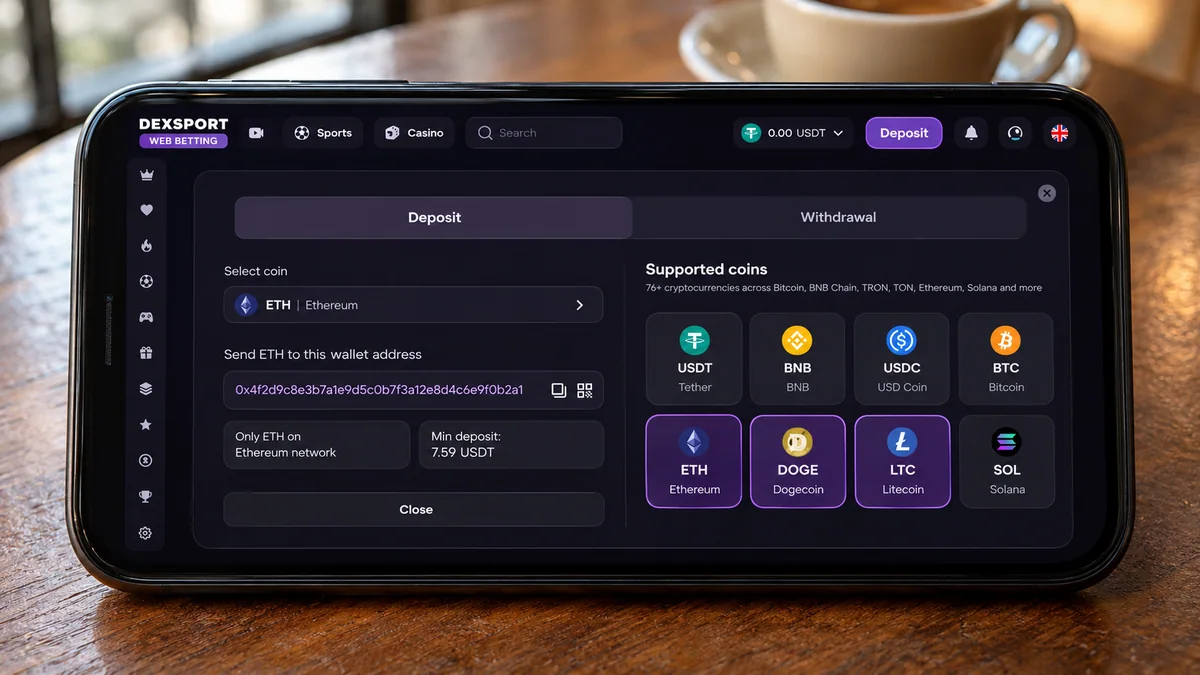
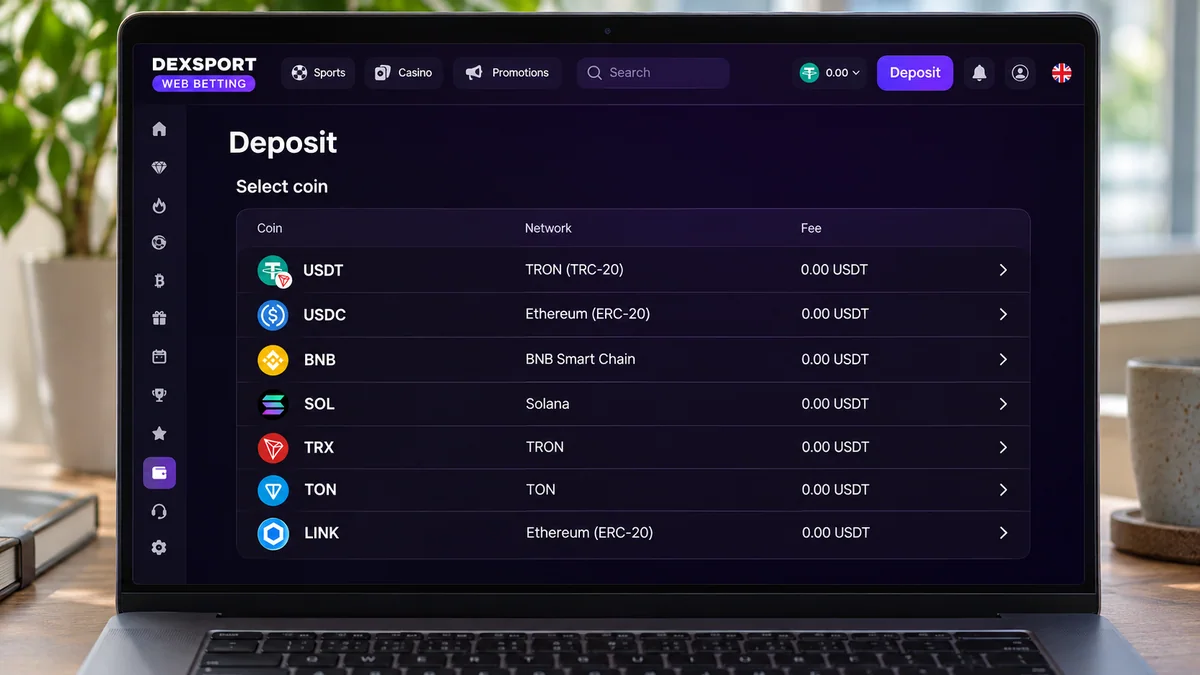
Solana addresses are not the same as addresses on other networks, and this is the single biggest source of deposit errors in crypto betting. If a sportsbook gives you a Solana deposit address and you send USDC on Ethereum, or BNB on BNB Chain, to that string, the funds will not arrive in your betting account. Depending on the route, they may be recoverable by the operator or may simply be lost. The same applies in reverse: a Solana address is not a valid destination for an Ethereum or Tron transfer. Before you send anything, confirm three things — the network named by the sportsbook, the token ticker, and the address itself — and make sure all three match what your wallet is about to do.
Token versus coin is the second trap. SOL is the native asset of the network and needs no special handling beyond a normal transfer. USDC and other tokens on Solana are SPL tokens, which live in token accounts associated with your wallet. Most modern wallets handle this transparently, but there are wrinkles. Some wallets and some deposit pages distinguish between "USDC (Solana)" and USDC on other chains, and picking the wrong one sends the wrong asset. Some tokens require your wallet to have an associated token account created before you can receive them, which costs a small amount of SOL. And a few tokens share a ticker with a well-known asset but are entirely different contracts; if a site asks you to deposit a token you do not recognise, stop and check.
Wallet hygiene is worth a paragraph of its own. Use a wallet you control rather than an exchange account as the source of deposits where you can, because it gives you a transaction record you can inspect and a clear view of what you sent. Keep your seed phrase offline and never enter it into a website. Treat any direct message offering to "help" with a deposit as a scam; legitimate operators do not need your keys. And consider using a fresh wallet for betting activity if you value separation between your main holdings and the funds you move to sportsbooks.
Accepted by betting sites?
Many crypto sportsbooks accept SOL directly, and rather more accept USDC or USDT on the Solana network even if they do not list SOL itself. The distinction matters when you are choosing what to deposit. SOL is volatile and is usually credited at the value prevailing when the site processes it, whereas a dollar-denominated stablecoin on Solana gives you a fixed amount to bet with and avoids the price question entirely. If a site supports both, stablecoins are often the calmer choice for a first deposit, with SOL reserved for users who specifically want to hold or bet in SOL.
Dexsport is a good example of the wallet-first model: you connect a wallet rather than creating a username-and-password account, there is no KYC gate on the crypto side, and deposits settle on-chain. That model suits Solana well, because the whole point is that you can move from wallet to bet without intermediaries. It also means the responsibility for getting the network and token right sits with you, which is why the checks in the previous section matter. We recommend it as the book we would point a Solana user toward, but the same principles apply at any operator: confirm the supported networks, confirm the token, and test small.
Not every site that lists SOL handles it identically. Some credit deposits after a fixed number of confirmations; some require a minimum deposit amount that is higher than the network minimum; some apply a conversion spread if your deposit is in SOL but your account is denominated in euros or stablecoins. Read the deposit page rather than assuming. A site that shows a Solana address and a QR code is telling you it supports the network, but it may still have rules about which tokens on that network it will accept.
There is also the question of availability and legality where you are. Crypto betting rules vary by jurisdiction, and the fact that a site accepts Solana deposits says nothing about whether you are permitted to use it from the Netherlands or anywhere else. We are not lawyers and this is not legal advice; check the rules that apply to you, and if in doubt, do not deposit. Whatever you decide, gamble only what you can afford to lose, and treat 18+ and responsible-gambling tools as a baseline rather than an afterthought.
Price swings while you wait
SOL is a volatile asset, and a deposit is not instantaneous in the sense that matters for price. Between the moment you decide to send and the moment the sportsbook credits your account at its chosen reference price, the value of what you sent can move. Usually the window is short — seconds to a few minutes — and the movement is small. But crypto does not always cooperate. A sharp move during a congested period, or a delay caused by an exchange's internal processing, can mean the amount credited differs noticeably from what you expected.
The mechanics depend on the operator. Some credit SOL at the market price at the time of receipt, so you bear the movement during transit. Some convert immediately to a fiat or stablecoin balance at their own rate, which may include a spread. Some let you hold a SOL balance and bet in SOL, in which case the price question does not end at deposit — your betting balance itself moves with the market. None of these is wrong, but they are different, and a careful user should know which one applies before sending a large amount.
Stablecoins on Solana remove most of this concern. If you deposit USDC, the amount you send is the amount you get, minus any fee, and the price of USDC relative to the euro is a much smaller variable than the price of SOL. For a first deposit, or for anyone who wants to think about betting rather than about crypto prices, that is usually the sensible route. If you specifically want SOL exposure, deposit SOL knowingly and size the amount accordingly.
There is a practical habit that helps here: decide the amount in the currency you will bet in, not in SOL, and convert at the moment of sending. If you want to bet €50, work out how much SOL that is right before you send rather than picking a round number of SOL and hoping. And avoid depositing during periods of extreme market movement, when both prices and network congestion tend to spike together, unless you have a reason to.
Tips for a first deposit
Start with a test. Send a small amount — enough to confirm the route works, small enough that a mistake is annoying rather than painful — and watch it arrive in your betting account before sending the rest. On Solana the fee for doing this is negligible, so there is no cost argument against it. If the test does not arrive, you have learned something important at minimal expense, and you can investigate before committing more.
Check the network and the token twice, once on the sportsbook's deposit page and once in your wallet's send screen. They must match exactly: Solana to Solana, and the same token on both sides. If the site says USDC on Solana and your wallet is set to send USDC on Ethereum, stop and change it. Copy the address rather than typing it, and compare the first and last characters. Keep a small SOL balance for fees so that a token transfer does not fail for want of a few lamports.
Use a wallet you control, keep the seed phrase offline, and never share it. Treat unsolicited offers of help as scams. If a deposit seems stuck, look up the transaction signature on a Solana block explorer before doing anything else; that will tell you whether the transaction succeeded, failed, or is still pending, and it is the information any support desk will ask for. Do not send a second deposit to "fix" a first one until you know what happened to it.
Finally, keep the money in perspective. Fast confirmations and low fees make it easy to move funds in and out, and easy is not always helpful if you are betting more than you intended. Set a limit before you deposit, use the site's responsible-gambling tools, and remember that crypto betting is 18+ and carries real financial risk. This guide is editorial, not legal advice, and the rules where you live may differ from what a site's deposit page implies. Check them, and bet only what you can afford to lose.
This guide was researched, written and fact-checked by the Altcoin Bet Guide editorial desk before publication. Last reviewed 08.11.2026. Spotted something wrong? Tell us.