BNB for betting: BNB Chain fees and compatibility
BNB and BNB Chain
BNB Chain began life as Binance Chain, a purpose-built network for the exchange's own token and a decentralised exchange, and it has since grown into a broader ecosystem with two closely related parts: the older BNB Beacon Chain and the BNB Smart Chain, which is where almost all betting-related activity now happens. When people say "BNB Chain" in a betting context, they nearly always mean the Smart Chain, an EVM-compatible network that runs smart contracts and hosts the tokens most sportsbooks list for deposits. The distinction matters because the two chains share a token name but not an address format or a deposit path, and mixing them up is one of the more common ways a deposit goes astray.
The native asset of the network is BNB, which serves two jobs at once. It is the token you send when you deposit "BNB" as a currency, and it is also the gas token you need in your wallet to move anything else on the chain. That dual role is the single most important practical fact for anyone using BNB Chain for betting. If you hold a BEP-20 stablecoin such as USDT or USDC on BNB Chain but your wallet has no BNB for gas, you cannot send that stablecoin anywhere until you top up with a small amount of BNB. Newcomers who bridge a stablecoin across and then find the send button greyed out are almost always missing gas, not missing funds.
The network's design choices shape how it feels to use for betting. Block times are short and fees are low by the standards of Ethereum mainnet, which makes it attractive for the kind of frequent, modest-sized transfers that betting deposits and withdrawals involve. It is also widely supported: most major wallets, including the big self-custody apps and hardware wallets, handle BNB Chain natively, and the token standards follow the familiar ERC-20 pattern closely enough that the learning curve is gentle for anyone who has used Ethereum. That compatibility is a genuine convenience, but it is also the source of the confusion covered later, because a token that looks identical on two networks behaves very differently when it is sent to the wrong one.
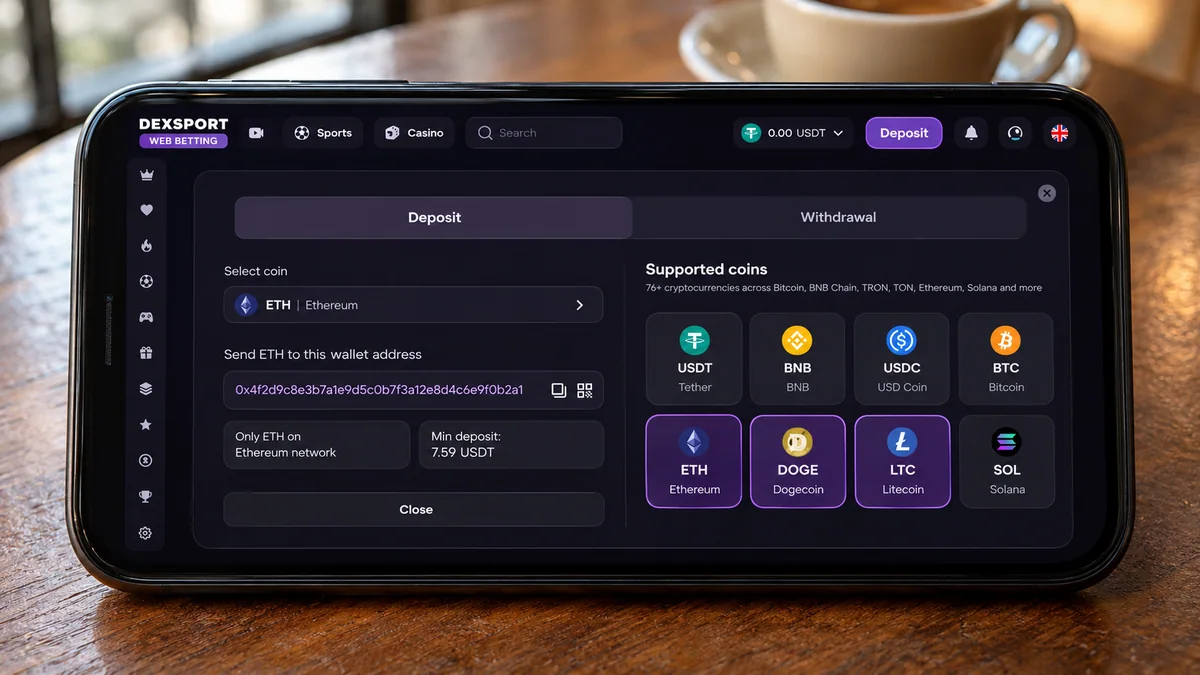
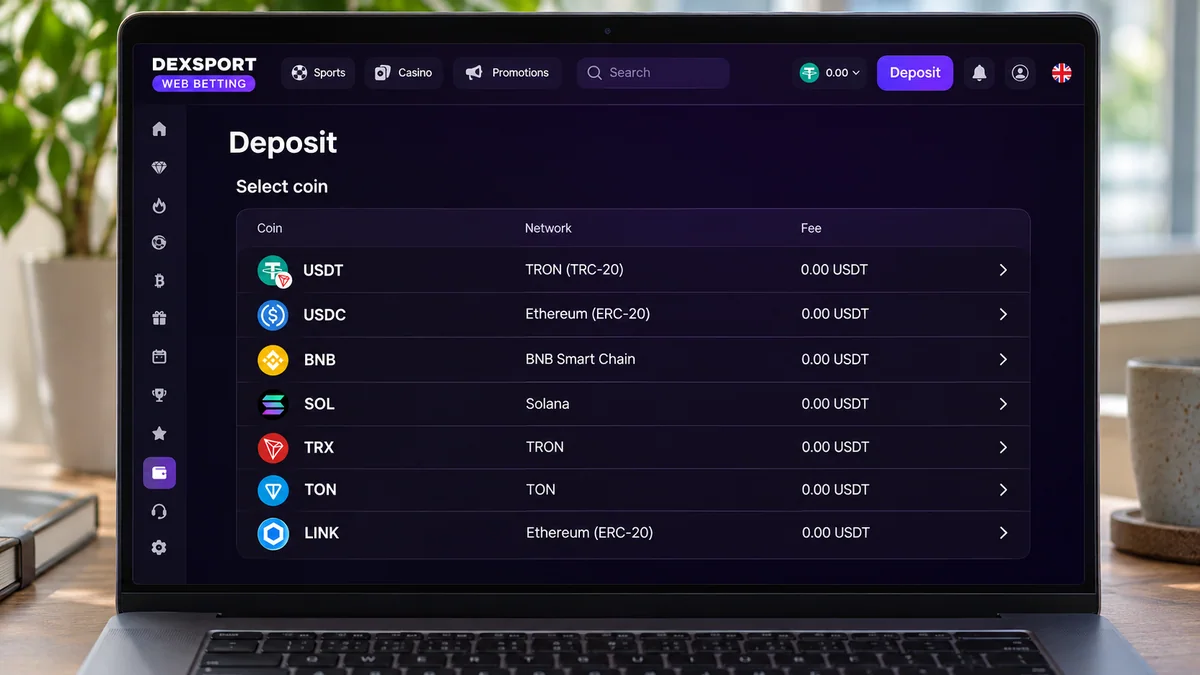
For betting specifically, BNB Chain occupies a middle ground. It is not the default settlement layer for the largest regulated sportsbooks, many of which prefer Ethereum or Tron for stablecoin deposits, but it is common enough among crypto-native and wallet-first books that a bettor who prefers low fees and fast confirmations will usually find it supported. Dexsport, the wallet-first no-KYC book we recommend, accepts deposits across several networks and BNB Chain is part of that mix, which makes it a reasonable example of how a modern crypto sportsbook handles the chain. The point is not that BNB Chain is uniquely suited to betting; it is that it is widely enough supported to be a sensible choice, provided you understand its quirks.
One more structural point deserves attention. BNB Chain is operated with a relatively small set of validators compared with Ethereum, and it has, over its history, paused or been halted during incidents. That centralisation trade-off is real and worth knowing before you rely on it for time-sensitive deposits, such as a bet you want to place before a match kicks off. For most routine deposits the network is fast and dependable, but it is not the most decentralised option available, and a careful reader should weigh that against the fee savings rather than assume all chains carry the same risk profile.
Fee profile
Fees on BNB Chain are paid in BNB and are calculated as gas used multiplied by gas price, with the gas price denominated in gwei, a tiny fraction of a BNB. In practice, a simple token transfer costs a small fraction of a dollar at typical network conditions, and even a more complex contract interaction usually stays well under a dollar. That is the headline appeal: moving a stablecoin across BNB Chain to fund a betting account typically costs cents rather than the several dollars an Ethereum mainnet transfer can command during busy periods. For a bettor making regular small deposits, that difference compounds quickly.
The fee you actually pay is not fixed, because gas prices fluctuate with network demand. During quiet periods a transfer may cost a negligible amount; during a burst of activity, such as a popular token launch or an airdrop claim rush, gas prices can rise several-fold and your transfer may take longer to confirm if you set a low limit. Wallets usually estimate a reasonable fee for you, and it is worth accepting a slightly generous estimate rather than shaving it to the minimum, because an under-priced transaction can sit pending and block subsequent sends from the same wallet until it is resolved. A pending transaction is not lost money, but it is an inconvenience that can cost you a betting window.
There is a second, less obvious cost: the gas you must hold in reserve. Because every transfer of a BEP-20 token requires BNB for gas, you need a small BNB balance in the sending wallet even when you are depositing a stablecoin. If you have swept all your BNB into a deposit or converted everything to USDT, you can find yourself unable to move the USDT. The fix is to keep a modest BNB float, enough for several transfers, and to top it up before it runs dry rather than after. This is a small piece of housekeeping that separates a smooth experience from a frustrating one.
Withdrawal fees are a separate matter and are set by the sportsbook, not the network. A book may charge a flat withdrawal fee that is higher than the underlying network cost, or it may pass on the network fee at cost, or it may absorb it. These policies vary and change, so we do not quote specific figures; check the cashier page of whichever book you use before you withdraw, and compare it against what the network itself would charge. The gap between the two is effectively a hidden cost, and on small withdrawals it can be proportionally significant. A book that charges a fixed fee on every withdrawal penalises small, frequent cash-outs far more than large, occasional ones.
Finally, consider the total cost of the round trip rather than just the deposit. You pay a network fee to send funds in, and you pay again, in some form, to take them out. On BNB Chain both legs are usually cheap, which is the point. But if you are depositing from a source that itself charges a fee, such as a centralised exchange withdrawal fee, that cost sits on top. The cheapest path is often to acquire BNB Chain assets directly on the network, either through an on-ramp that supports it or by withdrawing from an exchange that lists BNB Chain as a withdrawal network, rather than bridging from another chain and paying twice.
BEP-20 tokens versus native BNB
On BNB Chain there are two broad categories of asset you might deposit: native BNB and BEP-20 tokens. Native BNB is the chain's own currency, analogous to ETH on Ethereum. BEP-20 tokens are contracts built on top of the chain, and they include the stablecoins that most bettors actually want to deposit, such as USDT and USDC issued on BNB Chain, along with a long tail of other tokens. The technical difference matters because the two are sent and received differently, and a book that accepts one may not accept the other under the same deposit option.
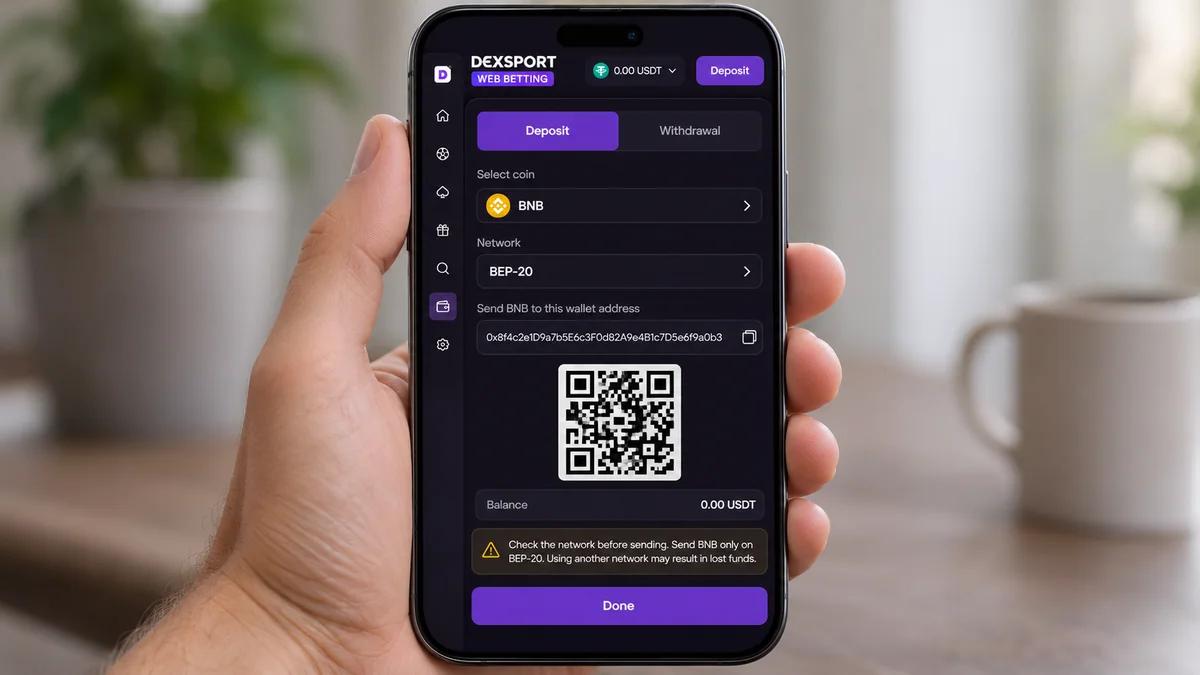
When a sportsbook lists "BNB" as a deposit currency, it means native BNB, and the address it gives you is a standard BNB Chain address. When it lists "USDT (BEP-20)", it means the BEP-20 contract for Tether on BNB Chain, sent to an address that is often the same format but is tagged internally to that specific token. Sending the wrong asset to the right address is a classic error: the funds arrive on-chain but the book's system does not credit them because it was not expecting that token, and recovery may require support intervention, if it is possible at all. Always match the exact asset and network named in the cashier, not just the address.
Stablecoins deserve particular care because the same ticker exists on many networks. USDT is issued natively on several chains, and the BEP-20 version is a distinct token from the ERC-20 version on Ethereum or the TRC-20 version on Tron. They are designed to hold the same value, but they are not interchangeable at the network level: a BEP-20 USDT sent to an address that expects ERC-20 USDT will not be credited, and in most cases the receiving platform cannot easily retrieve it. This is why the network selector in your wallet and on the exchange withdrawal page is the single most important field to check. The token name is not enough; the network is the deciding factor.
There is a further wrinkle with tokens that share a name but not a contract. Anyone can deploy a token called USDT on BNB Chain; only the official contract is the real one. If you are receiving tokens rather than buying them from a reputable source, verify the contract address against the issuer's own documentation before treating them as genuine. For betting deposits this is less of a risk, because you are sending out rather than receiving in, but it matters if you ever withdraw to a wallet and then move funds onward. A fake stablecoin in your wallet is worth nothing, and sending it to a book will not credit your account.
The practical upshot is a simple rule that covers most cases: deposit the asset the book names, on the network it names, and do not substitute. If you hold USDT on Ethereum and the book only accepts BEP-20 USDT, you need to move it to BNB Chain first, through a bridge or an exchange, and account for the cost and time of that move. If you hold native BNB and the book wants a stablecoin, you will need to swap, which itself costs gas and may incur slippage. Planning the asset and network before you start avoids the situation where funds are stranded mid-route while a match you wanted to back is underway.
Which books accept it
Support for BNB Chain among sportsbooks is uneven, and the pattern is worth understanding. The largest licensed operators, particularly those serving regulated European markets, tend to offer a narrow set of crypto deposit options, often Bitcoin, Ethereum and one or two stablecoin networks, and BNB Chain is not always among them. Crypto-native books, by contrast, frequently support a wider spread of networks precisely because their customers expect it. So the answer to "which books accept it" depends heavily on which kind of book you are using, and a bettor who assumes every crypto sportsbook takes BNB Chain will occasionally be disappointed.
Among the books that do support it, the common pattern is to offer BEP-20 stablecoins, especially USDT, as the BNB Chain deposit option, with native BNB less consistently supported. That reflects demand: most bettors want to deposit a dollar-pegged asset rather than a volatile one, so the stablecoin route is the one books prioritise. If a book lists BNB Chain at all, check whether it means native BNB or BEP-20 USDT, because the two are not the same deposit path and the cashier will usually distinguish them. Dexsport, as a wallet-first no-KYC book, supports deposits across multiple networks including BNB Chain, and its cashier is the kind of place where the network and asset are named explicitly, which is what you want to see.
Beyond the headline question of acceptance, there are secondary considerations that affect which book is the right fit. A book that accepts BNB Chain deposits but charges a flat withdrawal fee regardless of network may erode the fee advantage you gained on the way in. A book that credits deposits only after a fixed number of confirmations may be slower than the network itself, which matters if you are depositing close to kick-off. And a book that requires identity verification before withdrawal, even if it advertises no-KYC deposits, changes the calculus for anyone who chose a crypto book specifically to avoid that step. These are the details worth reading in the terms before you commit funds, not after.
It is also worth distinguishing between books that genuinely settle on BNB Chain and those that accept a BNB Chain deposit but convert it internally to another asset at a rate they set. The latter is not necessarily bad, but it introduces a conversion step you did not choose, and the rate may not be the market rate. If the cashier shows a conversion preview, read it. If it does not, ask support before depositing a large amount. Transparency about what happens to your deposit after it arrives is a reasonable thing to expect from any book you are trusting with money.
Finally, availability changes. Books add and remove networks, sometimes with little notice, and a network that was supported last season may be dropped or paused. Before you deposit, confirm the option is live in the cashier rather than relying on an old review or a forum post. Our own coverage is written to describe the landscape rather than to promise that any specific network will be available indefinitely, and the cashier is always the authoritative source. If BNB Chain is not listed, do not send BNB Chain assets to an address from another network in the hope that it will work; it will not.
Network mix-ups
The most expensive mistake in crypto betting is sending an asset on the wrong network, and BNB Chain is involved in a large share of these errors because so many tokens exist on it under familiar names. The mechanism is simple: an address on BNB Chain and an address on Ethereum can look similar, and some wallets even display the same address across EVM-compatible chains because they derive from the same key. That can lull you into thinking the network does not matter, when in fact it is the network, not the address, that determines where the funds land. A transfer sent on the wrong chain goes to an address on that chain which the recipient may not control or monitor.
Consider a concrete case. You hold USDT on Ethereum and want to deposit to a book that accepts USDT on BNB Chain. You copy the deposit address, which is a BNB Chain address, and paste it into your Ethereum wallet's send screen. The wallet may warn you that the address is not valid on Ethereum, or it may not, depending on the wallet. If the transaction goes through, the USDT lands at that address on Ethereum, not on BNB Chain, and the book, which is watching BNB Chain, never sees it. Recovery depends on whether the book controls the corresponding key on Ethereum, which it may not. This is why the network selector is not a formality.
The reverse case is just as common. You hold BEP-20 USDT and send it to an address the book gave you for ERC-20 USDT, perhaps because you selected the wrong deposit option. The funds arrive on BNB Chain at an address the book may not monitor for that token. Again, recovery is uncertain. Some books will help, especially if you contact support promptly with the transaction hash; others will not, and the terms often disclaim responsibility for deposits sent on the wrong network. The safe assumption is that a wrong-network deposit is your loss unless proven otherwise, and to treat every deposit as irreversible until the book confirms it.
There is a subtler variant involving bridges. If you bridge USDT from Ethereum to BNB Chain using a cross-chain bridge, you receive a representation of USDT on BNB Chain. Depending on the bridge, this may be the canonical BEP-20 USDT or a wrapped or bridge-issued token that is not the same contract. A book that accepts BEP-20 USDT will credit the canonical token but may not credit a bridge-issued variant, because it is a different asset. Before bridging, check whether the bridge issues the native BEP-20 token or a wrapped version, and if it is the latter, consider swapping to the canonical token before depositing. This is exactly the kind of edge case that catches experienced users, not just beginners.
Wallets can help or hinder. Good wallets show the network prominently and warn when an address does not match the selected network, and some will refuse to send a token to an address that is not valid on the current chain. Others are more permissive. It is worth knowing which kind you have before you move money. A simple habit reduces risk substantially: after copying a deposit address, check the first and last few characters against the cashier, confirm the network name matches exactly, and send a small test amount first if the sum is large or the route is unfamiliar. A test deposit costs a few cents on BNB Chain and can save you the entire amount.
Sizing deposits
How much to send in a single deposit is a question with more to it than it first appears. The obvious consideration is that BNB Chain fees are low, so small deposits are economically viable in a way they are not on more expensive networks. Sending a modest amount to test the route, then following with the bulk once it credits, is a sensible pattern that costs little on BNB Chain. On Ethereum the same two-step approach would double an already significant fee, which is why the test-deposit habit is more common among BNB Chain users and more justified there.
The second consideration is volatility, and it cuts differently depending on what you deposit. If you deposit native BNB, the value of your betting balance moves with the token until you place a bet or convert it. A book that holds your deposit as BNB exposes you to that price risk, and a book that converts to a fiat balance at deposit time locks in the rate at that moment. Neither is wrong, but you should know which applies. Most bettors who want a stable betting balance deposit a stablecoin rather than BNB for exactly this reason, keeping BNB only for gas. If you do deposit BNB, size it to what you intend to bet in the near term rather than treating it as a savings account.
Third, consider the book's minimum and maximum deposit limits. These are set by the operator and vary widely. A minimum that is high relative to your intended stake forces you to deposit more than you want, which is a reason to choose a book whose limits fit your betting. A maximum can matter if you are funding a large balance, because you may need to split the deposit across several transactions, each incurring a fee and a confirmation wait. Check both limits in the cashier before you commit to a book, and remember that limits can change, so re-check if it has been a while since you last deposited.
Fourth, think about withdrawal sizing in parallel with deposit sizing. If you deposit a large amount in one go and then want to withdraw most of it after a few bets, you may run into a withdrawal fee that is fixed per transaction, making a single large withdrawal cheaper than several small ones. The efficient pattern is often to deposit in one or two transactions and withdraw in one, rather than dribbling funds in and out. On BNB Chain the network fees are small enough that this matters less than on expensive chains, but the book's own withdrawal fee, if fixed, still rewards consolidation.
Finally, keep the gambling side of sizing in view. The amounts you move should reflect what you can afford to lose, not what the low fees make easy. Cheap transactions can encourage frequent top-ups, and frequent top-ups can encourage more betting than you intended. A budget set before you deposit, and a habit of withdrawing winnings rather than rolling them back in, are more valuable than any fee saving. This is not legal advice, and the rules on online gambling differ by jurisdiction, including within the Netherlands, so check your local position before depositing. Gambling is for adults aged 18 and over only; if it stops being fun, take a break and seek support from a responsible-gambling service.
This guide was researched, written and fact-checked by the Altcoin Bet Guide editorial desk before publication. Last reviewed 08.11.2026. Spotted something wrong? Tell us.